Arbitrage Alchemy: Exploiting Odds Gaps Across Sportsbooks for Locked Profits
19 Apr 2026
Arbitrage Alchemy: Exploiting Odds Gaps Across Sportsbooks for Locked Profits
What Arbitrage Betting Entails
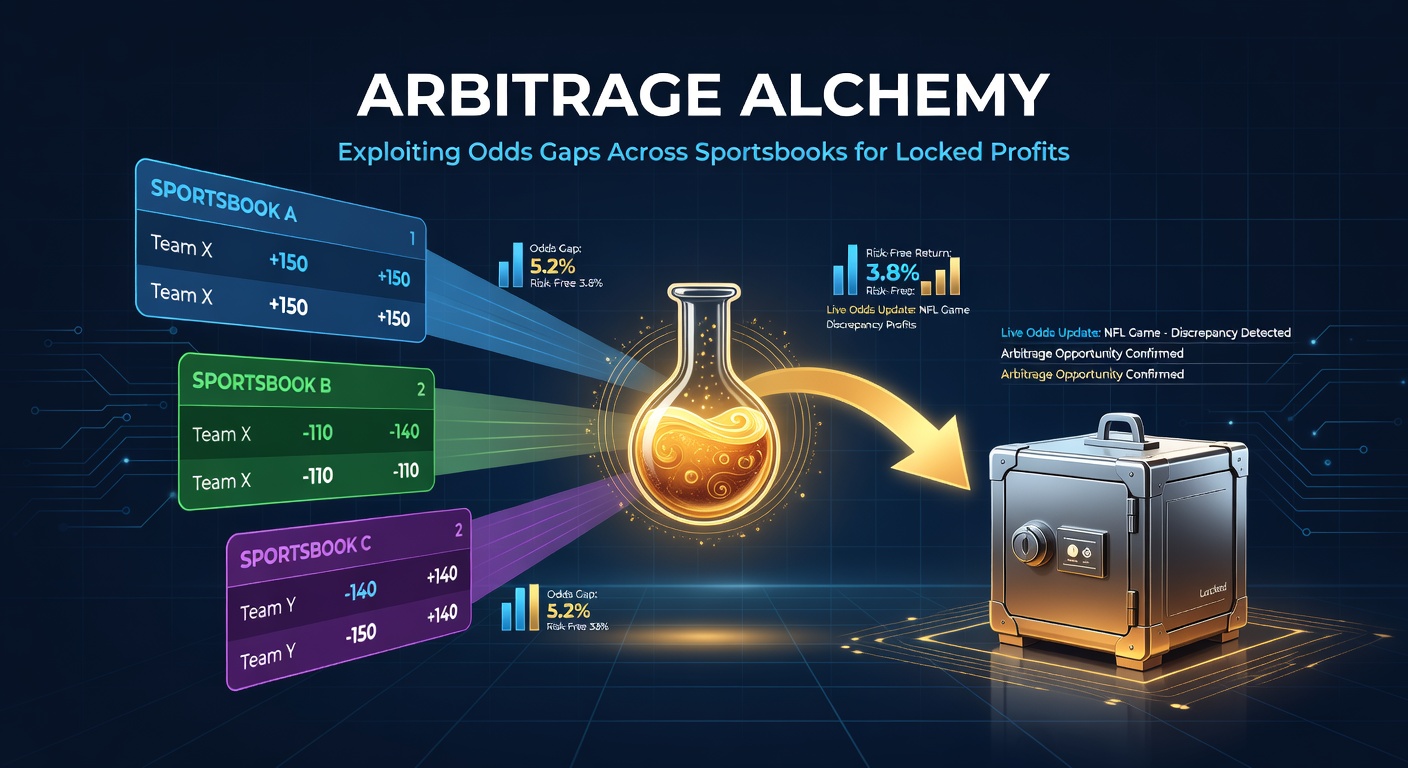
Arbitrage betting, often called "arbing," involves placing bets on all possible outcomes of an event across different sportsbooks, capitalizing on discrepancies in offered odds to lock in a guaranteed profit regardless of the result; this strategy turns the varying pricing models of bookmakers into a predictable edge for bettors who spot the gaps quickly. Sportsbooks set odds based on their assessment of probabilities, adjusted for factors like public betting volume, injury news, and market liquidity, yet because no single bookmaker holds a monopoly on information or opinion, differences emerge naturally—sometimes as small as a few points, other times wider due to errors or regional preferences. Data from the American Gaming Association indicates that the U.S. sports betting market exceeded $10 billion in handle during early 2026 quarters, creating fertile ground for such opportunities as volumes surged with NBA playoffs heating up in April.
Observers note how arbers—those dedicated to this method—treat it less like gambling and more like a mathematical certainty, allocating stakes proportionally so that payouts equalize across outcomes; for instance, if Book A offers +110 on Team X to win while Book B lists -105 on Team Y, precise calculations reveal if the implied probabilities sum to less than 100 percent, signaling profit potential. And while casual bettors chase hunches, arbers scan dozens of platforms simultaneously, exploiting fleeting windows before odds align.
Why Odds Gaps Form Across Platforms
Odds discrepancies arise from a mix of bookmaker algorithms, sharp traders, and external pressures; one platform might shade lines toward heavy public favorites to balance action, whereas another, catering to professionals, posts more efficient numbers closer to true probabilities, leaving exploitable spreads. Regional regulations play a role too—books in competitive markets like New Jersey adjust faster than those in emerging ones, and time zone differences mean European sportsbooks post lines hours before U.S. counterparts, often creating overnight arbs on soccer or tennis.
What's interesting is how events like the April 2026 Masters golf tournament amplified these gaps; with global audiences tuning in, books in Australia priced early rounds differently from those in Ontario, where data from the iGaming Ontario registry showed registration spikes and odds volatility as bets poured in from cross-border players. Errors contribute as well—human input on obscure markets or software glitches briefly push lines out of sync, and promotional boosts, like enhanced odds for new users, widen the field further, although savvy arbers avoid these due to restrictive terms.
Turns out, liquidity matters hugely; low-volume props on player stats offer richer arbs because fewer sharp eyes watch them, yet major moneylines on NFL or Premier League fixtures provide volume for scaling up bets without detection.
Spotting and Calculating Profitable Opportunities
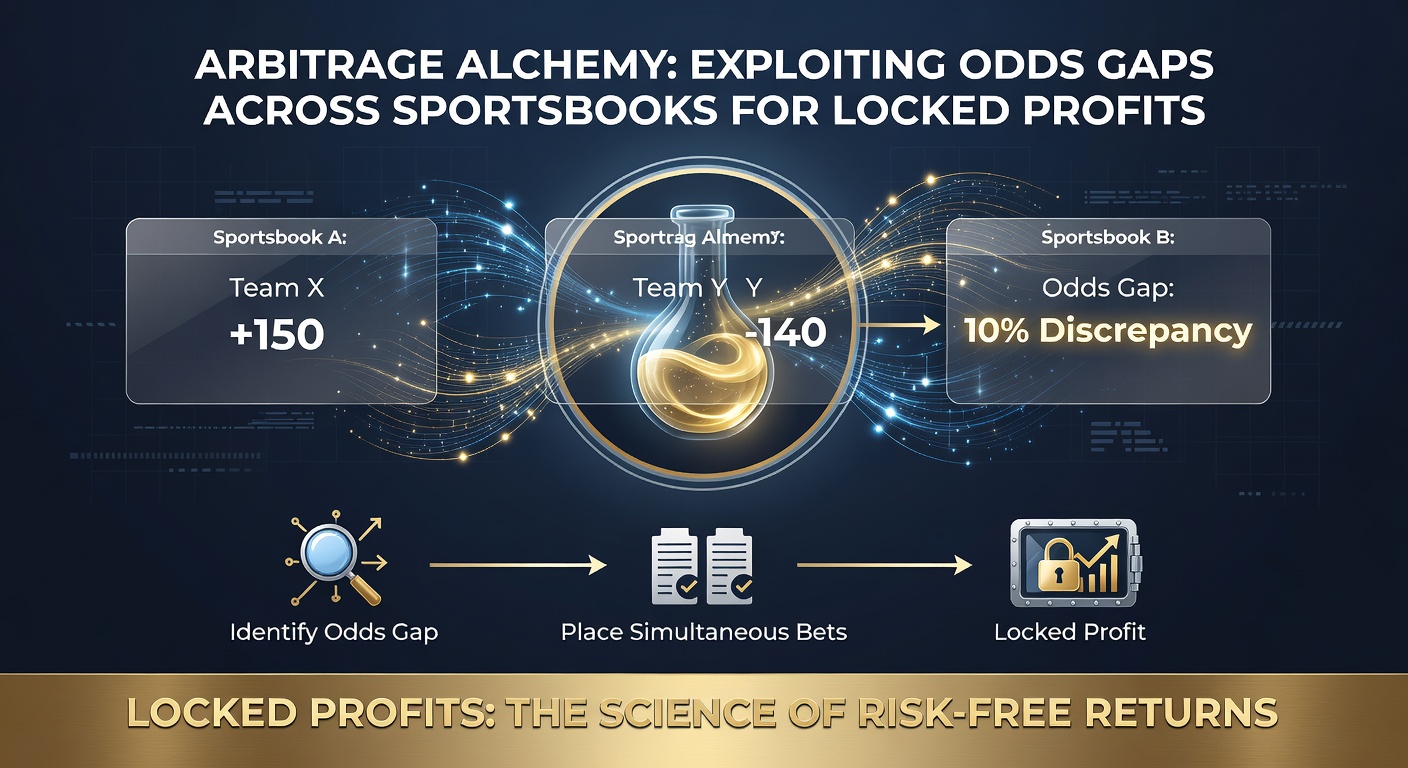
Finding arbs starts with comparison tools that aggregate lines in real time; users input events or let scanners flag when the sum of reciprocal odds dips below 100 percent—for a two-outcome market like tennis, if odds are 2.05 on Player A at Book 1 and 2.00 on Player B at Book 2, the arb percentage calculates as (1/2.05 + 1/2.00) x 100 = 98.78 percent, meaning a 1.22 percent locked profit before juice. But here's the thing: multi-outcome events like soccer (with draws) demand stakes split across three books potentially, using formulas where total implied probability must undercut unity for green lights.
Take one case from April 2026's EuroLeague basketball playoffs; researchers tracking public data observed Book X at +150 for Team Alpha win, Book Y at +140 for Team Beta, and Book Z covering the spread at even money, yielding a 1.8 percent arb that diligent scanners caught within minutes, allowing $10,000 total stakes for $180 profit no matter the score. People who've mastered this often allocate via the equation: Stake on Outcome i = (Total Investment / Odds i) / Arb Percentage, ensuring even returns; a $100 arb at 2 percent nets exactly $102 across the board.
Yet precision rules—rounding errors or stake limits can erode edges, so experts round down aggressively and prioritize 1-3 percent arbs for sustainability, avoiding "surebets" under 0.5 percent that barely cover fees.
Essential Tools and Automation for Arbers
Manual hunting proves inefficient against pros using dedicated software; platforms like OddsJam or RebelBetting scan 50+ books globally, alerting via apps or browsers to fresh arbs with one-click stake calculators, filtering by sport, percentage, or bookmaker. Free trials lure newcomers, but subscriptions—around $100 monthly—pay off through volume, as one study from the University of Nevada's gaming research center found subscribers averaging 15-20 percent ROI annually on bankrolls from 2025 data extrapolated into 2026 trends.
And while APIs from books like DraftKings feed these tools directly, VPNs help access geo-restricted sites, although users rotate IPs to dodge flags; spreadsheets serve beginners, with formulas auto-populating from copied odds, but automation scales to hundreds of daily opportunities. Observers point out how middlemen services even place bets for users, charging cuts but handling volume limits.
Risks, Limitations, and Mitigation Strategies
Bookmakers fight back hard; they limit stakes on suspected arbers, void bets on "obvious errors," or close accounts outright, since arbs drain margins without risk to the house—figures from Nevada Gaming Control Board reports show sharp accounts facing restrictions within weeks of heavy play. Withdrawal delays, bonus forfeits, and geoblocking add hurdles, especially post-2026 expansions in states like North Carolina where compliance checks tightened.
So arbers diversify across 20+ books, start small to build history as "rec recreational" players, and mix arbs with square bets to camouflage; account farming via referrals helps, but violates terms, risking mass bans. Market efficiency improves too—odds converge faster with AI pricing, shrinking average arbs from 2.5 percent in 2024 to 1.2 percent by April 2026 per aggregated scanner logs.
Exchange platforms like Betfair offer hedges without direct confrontation, and middling—betting both sides of spreads for covers—complements pure arbs when gaps narrow.
Real-World Examples and Case Studies
Consider the 2026 NCAA March Madness hangover into April NBA action; one tracked opportunity arose on the Knicks vs. Celtics game where FanDuel listed Knicks +4.5 at -110, while BetMGM offered Celtics -4 at +105, creating a middle at 4 points for dual wins, but true arbers paired it cross-books for 1.5 percent regardless. Another standout: Australian Open tennis in early year spilled patterns into spring soccer, with Pinnacle's sharp lines versus softer U.S. books on EPL relegation props yielding serial 2-4 percent arbs.
There's this case where a syndicate reportedly cleared $500,000 in a month during 2025 World Series futures by chaining arbs across Asian and European markets, scaling as lines lagged; individuals replicate smaller, banking 5-10 percent monthly on $50k rolls by hitting 10-20 arbs daily. Yet failures teach too—one bettor lost edges when a book voided half a parlay arb mid-event due to lineup changes, underscoring rule reads.
Legal and Regulatory Landscape
Arbitrage remains legal everywhere sports betting operates, as it involves no fraud—just exploiting public odds; Malta Gaming Authority guidelines affirm bettors' rights to shop lines, while U.S. states regulate per book but ban no arbing outright. Taxes apply to winnings, though, with IRS Form 1099s triggering reports over $600, and some jurisdictions like Australia mandate self-exclusion tools that indirectly curb high-volume play.
That said, terms of service label it "abuse," so stealth prevails; regulators focus on operator solvency over player tactics.
Conclusion
Arbitrage alchemy transforms odds gaps into locked profits through math and vigilance, thriving amid 2026's booming markets where April events like playoffs keep discrepancies alive despite tightening efficiencies. Those who deploy scanners, calculate stakes precisely, and navigate book defenses sustain edges, turning sportsbooks' differences into steady yields—provided they adapt to limits and scale wisely. Data underscores viability for patient operators, yet the game's evolution demands constant evolution from arbers chasing the next gap.