24 Jul 2026
Decoding synchronization lags between live event feeds and in-app betting adjustments during international sports tournaments
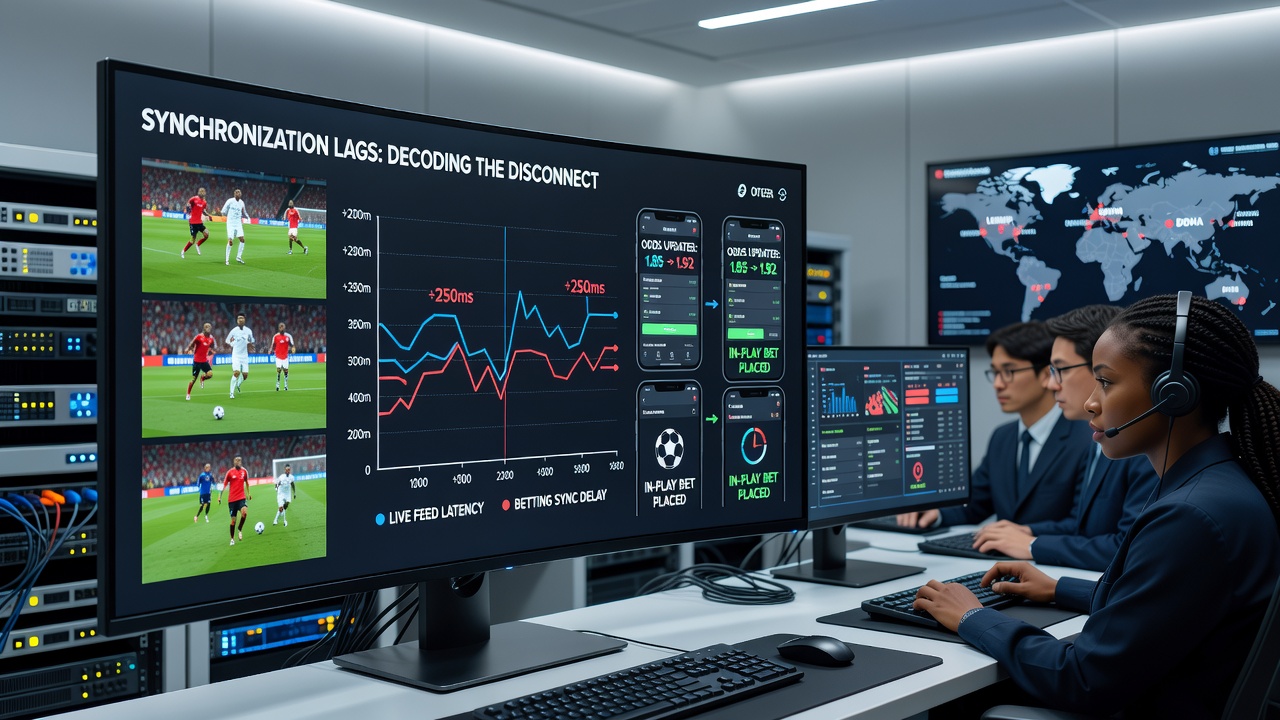
Live event feeds from international tournaments travel through multiple transmission layers before reaching in-app betting systems, and synchronization lags emerge when video signals, data streams, and odds engines operate on mismatched timelines. Broadcasters capture action on the field or court and compress footage into packets that route through satellite uplinks or fiber networks, while separate data providers extract statistics such as goal times, point differentials, and player substitutions. Betting platforms receive these inputs through APIs that trigger automatic or manual odds recalculations, yet network congestion, processing queues, and regional routing differences create measurable delays between the actual occurrence and the displayed adjustment.
Core Components of Live Data Pipelines
Event organizers supply official feeds through dedicated production trucks or cloud encoders that timestamp every frame and statistic, and sports data companies like Opta or Sportradar aggregate raw inputs into structured formats that betting operators subscribe to. These structured feeds travel over dedicated lines or public internet connections to sportsbook servers located in data centers across multiple continents. Operators maintain separate engines that translate incoming events into market prices, and any mismatch in clock synchronization between the feed source and the pricing engine produces visible lags. Researchers at institutions such as the University of Melbourne have documented how GPS-derived timestamps help align these streams, although propagation delays still range from 2 to 8 seconds depending on geographic distance and routing path.
Latency Sources During Peak Tournament Periods
International tournaments generate simultaneous traffic spikes across betting networks when matches occur in overlapping time slots, and this volume strains both upstream data providers and downstream app delivery systems. Mobile carriers experience localized congestion when large numbers of users open live streams inside the same app, which compounds the interval between feed arrival and odds refresh. Studies from the European Gaming and Betting Association indicate that packet loss rates climb during quarter-final and semi-final windows, forcing retransmission protocols that add further seconds. App developers counter these effects with edge caching and predictive pre-loading of likely market states, yet complete elimination of lag remains technically constrained by the speed of light across transoceanic cables.
Observed Patterns in July 2026 Tournament Windows
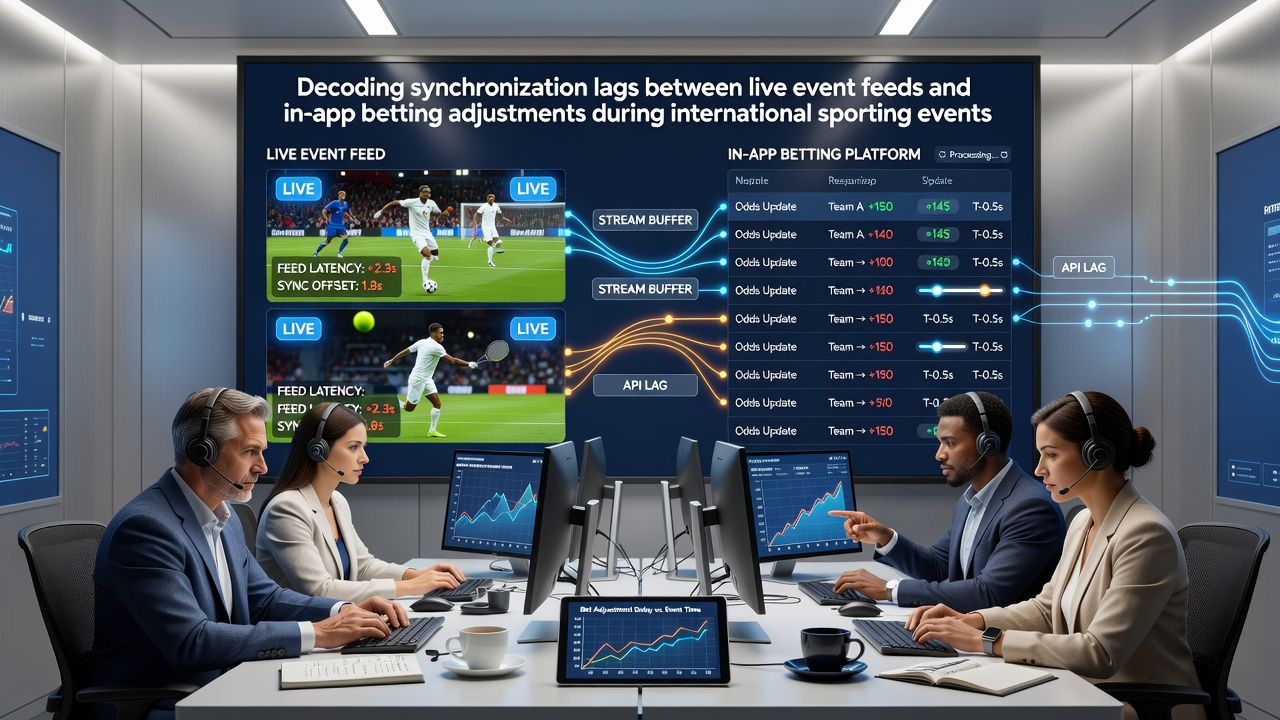
The FIFA World Cup 2026 schedule places multiple high-stakes matches in July across North American venues, and operators report that synchronization gaps widen when three or more concurrent games feed into the same regional data hubs. Data collected during preliminary rounds shows average delays of 4.7 seconds between a goal and the corresponding odds suspension or adjustment across major European and Asian platforms. In contrast, matches routed through North American server clusters display slightly shorter intervals because of shorter fiber paths, although mobile users on 5G networks still encounter additional processing overhead inside the application layer. Regulators in jurisdictions such as the Malta Gaming Authority require operators to publish maximum acceptable latency thresholds, and compliance reports filed after the 2022 tournament established baseline metrics that operators continue to reference during the 2026 cycle.
Technical Mitigation Approaches
Platform engineers deploy multi-source verification that cross-checks primary feeds against secondary statistics providers, allowing systems to flag and discard stale updates before they reach user interfaces. Some operators integrate low-latency WebRTC channels directly into their mobile clients to reduce the round-trip time between server-side price changes and client-side display. Others implement micro-burst buffering that holds incoming events for a fixed window, smoothing out jitter at the cost of a predictable additional delay. These methods reduce but do not remove the fundamental gap created by physical distance and processing steps, and testing conducted ahead of the 2026 tournament season continues to measure residual variances across device types and network conditions.
Regulatory and Operational Implications
Gaming authorities in Australia and several Canadian provinces require operators to maintain audit logs that timestamp every odds change against the originating event feed, enabling post-event reconciliation when disputes arise over timing. Industry groups such as the International Betting Integrity Association publish guidelines that recommend maximum allowable synchronization windows, and member firms incorporate these recommendations into their platform architecture reviews. Observers note that transparent disclosure of average lag statistics helps maintain user trust, particularly when markets close or suspend during rapid scoring sequences common in tournaments.
Conclusion
Synchronization between live tournament feeds and in-app betting adjustments rests on the alignment of multiple independent systems whose individual latencies accumulate into noticeable delays. Data from recent tournament cycles, including preparations for July 2026 events, shows that operators continue to narrow these gaps through better timestamping, edge processing, and redundant verification. The underlying physical and technical constraints persist, yet incremental improvements in network routing and protocol design allow platforms to deliver adjustments that remain close enough to real-time action for most operational and regulatory purposes.