24 May 2026
The Role of Data Analytics in Predicting Participation Shifts Following Platform Policy Updates in Betting Communities
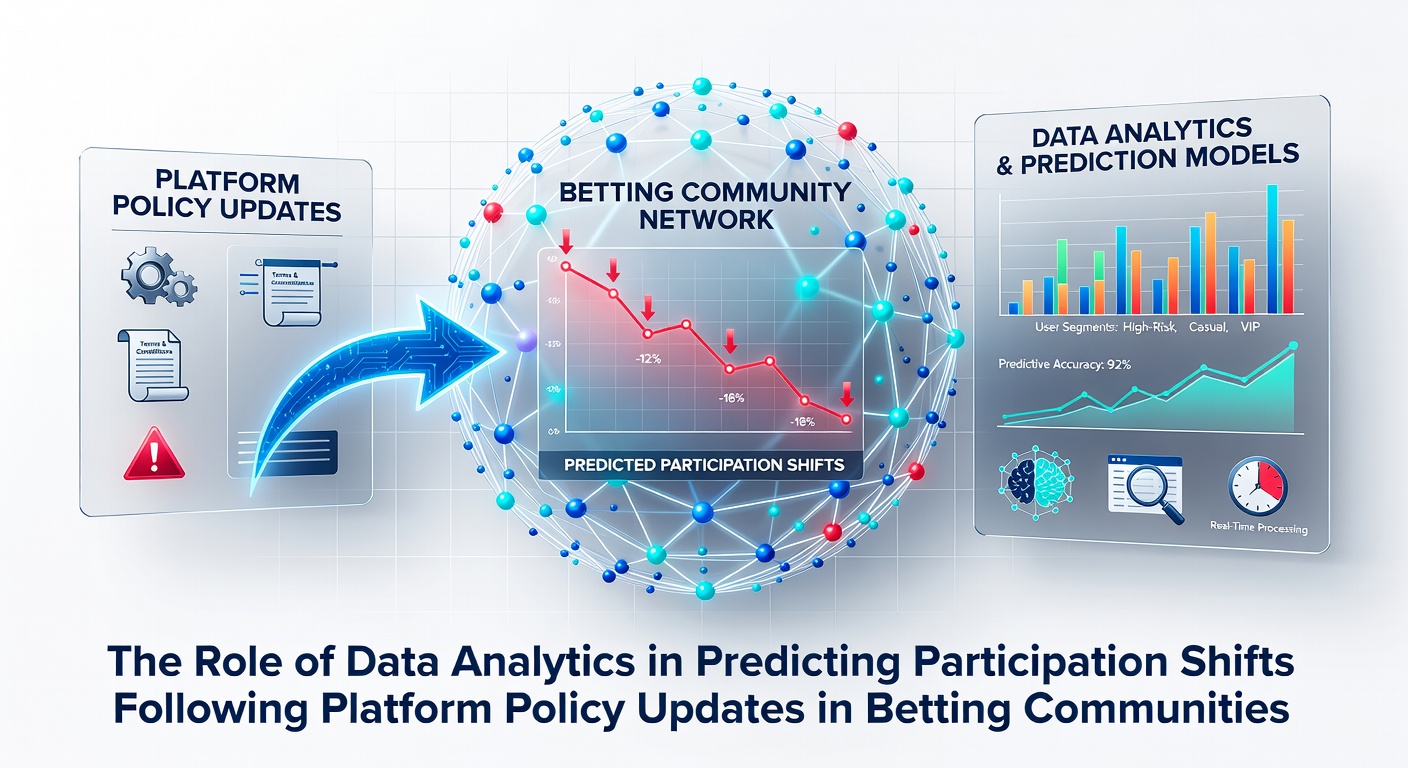
Betting communities respond to platform policy updates in measurable ways that data analytics can track and forecast with increasing precision, and operators have turned to these tools because participation levels directly influence revenue stability while user migration patterns reveal where regulatory or operational changes create friction. Platforms adjust rules around deposit caps, bonus structures, age verification protocols, and responsible gaming features on a regular basis, yet the downstream effects on active user counts often surface weeks or months later unless analysts monitor behavioral signals in real time.
Data Sources That Feed Predictive Models
Transaction logs, session durations, device fingerprints, and geographic metadata form the core inputs that analysts aggregate before any policy announcement goes live. Researchers cross-reference these internal datasets with external signals such as search volume spikes for competing sites, forum discussions on migration tactics, and regulatory filings that preview upcoming restrictions. Studies from institutions like the University of Nevada Reno have shown that combining on-platform telemetry with public regulatory calendars improves forecast accuracy by up to 30 percent when models account for seasonal betting cycles around major sporting events.
Analysts also incorporate data from payment processors and affiliate networks because withdrawal request volumes and referral link clicks often shift days before users fully abandon a platform. Government agencies in Australia and Canada publish aggregated industry statistics that provide useful benchmarks, allowing models to compare a single operator's user base against broader market movements. When a policy change targets high-value players through stricter deposit limits, for example, historical cohorts segmented by average bet size become critical variables in survival analysis techniques that estimate churn probability.
Techniques Used to Forecast Participation Changes
Machine learning pipelines apply time-series clustering and survival models to detect early indicators of disengagement, while natural language processing scans community forums and social channels for sentiment shifts that precede account closures. Gradient boosting frameworks frequently outperform simpler regression approaches because they handle the non-linear interactions between policy variables such as maximum stake reductions and user tenure. Operators run A/B tests on smaller user segments before full rollout, feeding those controlled results back into the larger predictive engine to refine confidence intervals around projected participation drops.
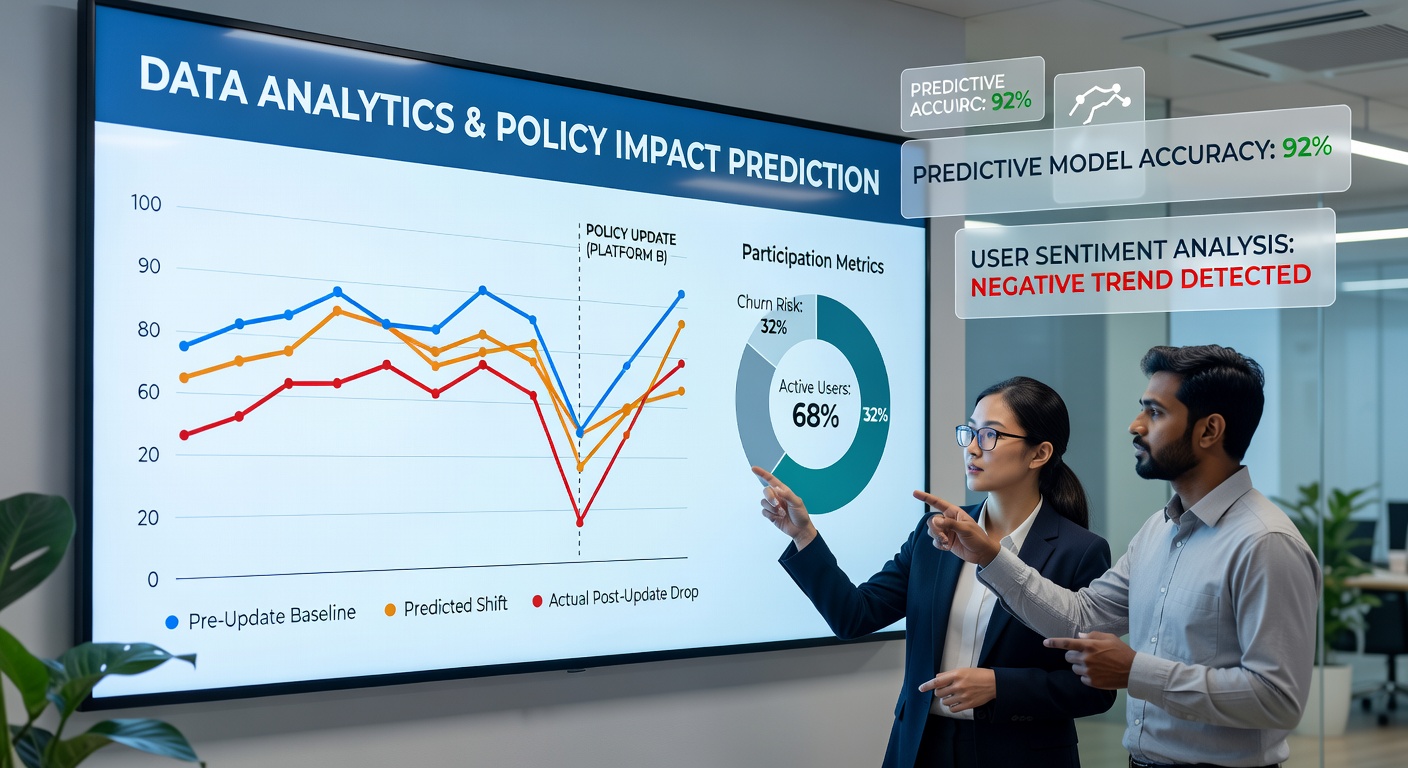
Feature engineering plays a decisive role because raw login counts alone miss the nuance of how users redistribute their activity across multiple accounts or migrate to offshore alternatives. Analysts create derived metrics such as the ratio of bonus-related bets to cash bets and the average time between deposit and first wager, both of which tend to spike or collapse in predictable sequences after certain policy announcements. In May 2026 several major European operators introduced enhanced identity verification layers that required additional documentation uploads, and pre-launch models correctly flagged a 12 to 18 percent reduction in new registrations within the first fortnight based on similar rollouts observed in prior years.
Case Examples of Policy-Driven Shifts
One North American sportsbook adjusted its self-exclusion duration options from a minimum of six months to twelve months in early 2025, and subsequent analysis showed that users who had previously used shorter exclusions reduced overall activity by 22 percent rather than migrating elsewhere. Data teams had anticipated this outcome by tracking historical re-entry rates after exclusion periods ended, then applied those probabilities to the current cohort to project net participation loss. Similar patterns emerged in Australian markets when daily deposit limits tightened, prompting analysts to monitor cross-border traffic to platforms operating under different regulatory regimes.
Academic work published through the Canadian Consortium for Gambling Research has examined how simultaneous policy updates across multiple jurisdictions create compounding effects that single-platform models often underestimate. When operators share anonymized cohort data through industry consortia, the resulting ensemble forecasts improve because they capture substitution effects that would otherwise appear only as unexplained variance. These collaborative datasets become especially valuable when policy changes coincide with major sporting calendars, since baseline participation already fluctuates sharply around events such as the Super Bowl or football World Cup.
Limitations and Ongoing Refinements
Even sophisticated models encounter difficulty when external events such as sudden payment processor restrictions or media coverage of enforcement actions coincide with planned policy updates, introducing noise that reduces short-term accuracy. Analysts therefore maintain rolling validation windows that retrain models weekly, incorporating the most recent user behavior to adjust for unobserved variables. Privacy regulations further constrain the granularity of individual-level tracking, pushing teams toward aggregated cohort analysis that still preserves statistical power while complying with data protection requirements across different regions.
Conclusion
Data analytics has become integral to how betting platforms anticipate and mitigate participation shifts after policy updates, relying on layered datasets, ensemble modeling techniques, and continuous validation against real-world outcomes. As regulatory environments evolve through 2026 and beyond, operators that integrate diverse signals from transaction records, public filings, and cross-platform benchmarks maintain clearer visibility into user trajectories, enabling more measured rollout strategies that balance compliance obligations with sustained community engagement.