20 May 2026
Tracing Algorithmic Bonus Adjustments Across Emerging Global Betting Networks
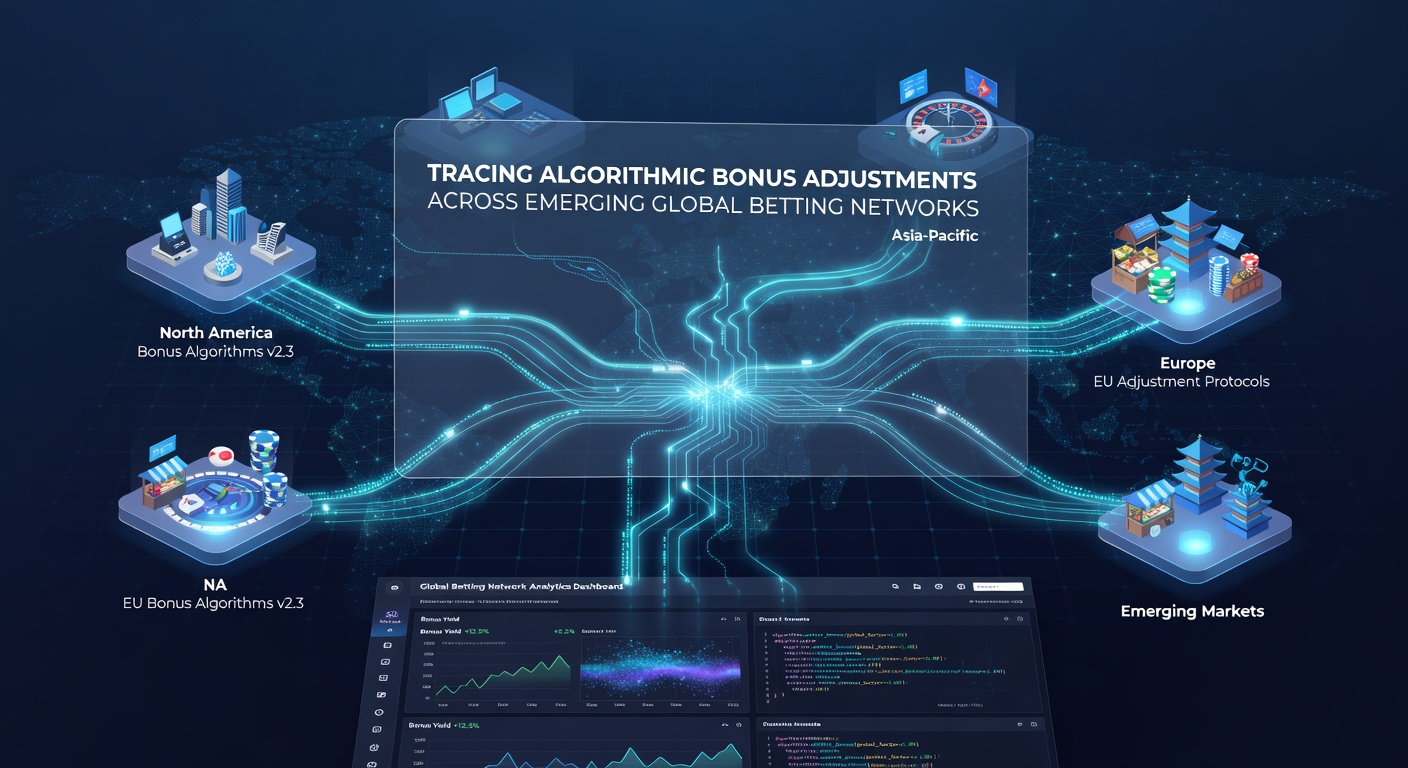
Algorithmic systems now monitor player activity, deposit patterns, and network-wide risk factors to recalibrate bonus offers on the fly, and observers in the industry have tracked these adjustments across platforms operating in Asia, Latin America, and parts of Africa since early 2025. Data from regulatory filings shows that operators integrate machine learning models capable of processing thousands of variables per second, including login frequency, wager size, and even cross-site behavior when users switch between affiliated apps.
How Core Algorithms Detect and Respond to Player Signals
These models pull from live data streams that combine account history with broader market conditions, so an increase in high-volume bets from a particular region can trigger an automatic reduction in welcome bonus percentages while loyalty multipliers rise for lower-risk segments. Researchers at several gaming analytics firms have documented cases where the same user receives a 50 percent deposit match on one network yet sees that offer scaled back to 30 percent within minutes after activity spikes on a linked sportsbook.
Operators fine-tune decision trees that weigh fraud probability against retention value, and the systems automatically pause or escalate bonus eligibility when velocity thresholds are crossed. One documented workflow involves real-time API calls between sportsbook engines and casino modules, allowing a single algorithmic layer to enforce consistent rules whether the player is claiming a free spin package or a cashback credit on accumulated losses.
Regional Network Expansion and Synchronization Patterns
Emerging markets have become test beds for these interconnected platforms, with operators in Southeast Asia and Eastern Europe linking bonus ledgers through shared cloud infrastructure. As of May 2026, synchronization protocols between platforms in Singapore, Brazil, and South Africa enable adjustments that reflect both local regulatory limits and aggregated user data from all participating jurisdictions. Figures released by the Gambling Regulatory Authority of Singapore indicate that coordinated bonus recalibrations reduced average payout ratios by 2.3 percent during high-traffic periods without altering headline promotional rates visible to players.
Networks operating across multiple time zones rely on distributed ledger elements to maintain audit trails, which helps compliance teams verify that every adjustment aligns with jurisdiction-specific caps on promotional value. Those who've examined the architecture note that latency under 200 milliseconds between regional nodes allows the central model to push revised bonus parameters before most users complete a deposit sequence.
Technical Mechanisms Behind Real-Time Recalibration
Gradient boosting frameworks and reinforcement learning agents form the backbone of many current implementations, continuously retraining on anonymized transaction batches collected every fifteen minutes. When a cluster of accounts exhibits similar deposit timing and game selection, the algorithm can apply cohort-level restrictions that limit bonus stacking while preserving individual offer visibility. Industry reports highlight that these cohort rules have become more granular since late 2025, incorporating device fingerprinting and behavioral biometrics to distinguish legitimate multi-account usage from coordinated bonus hunting.
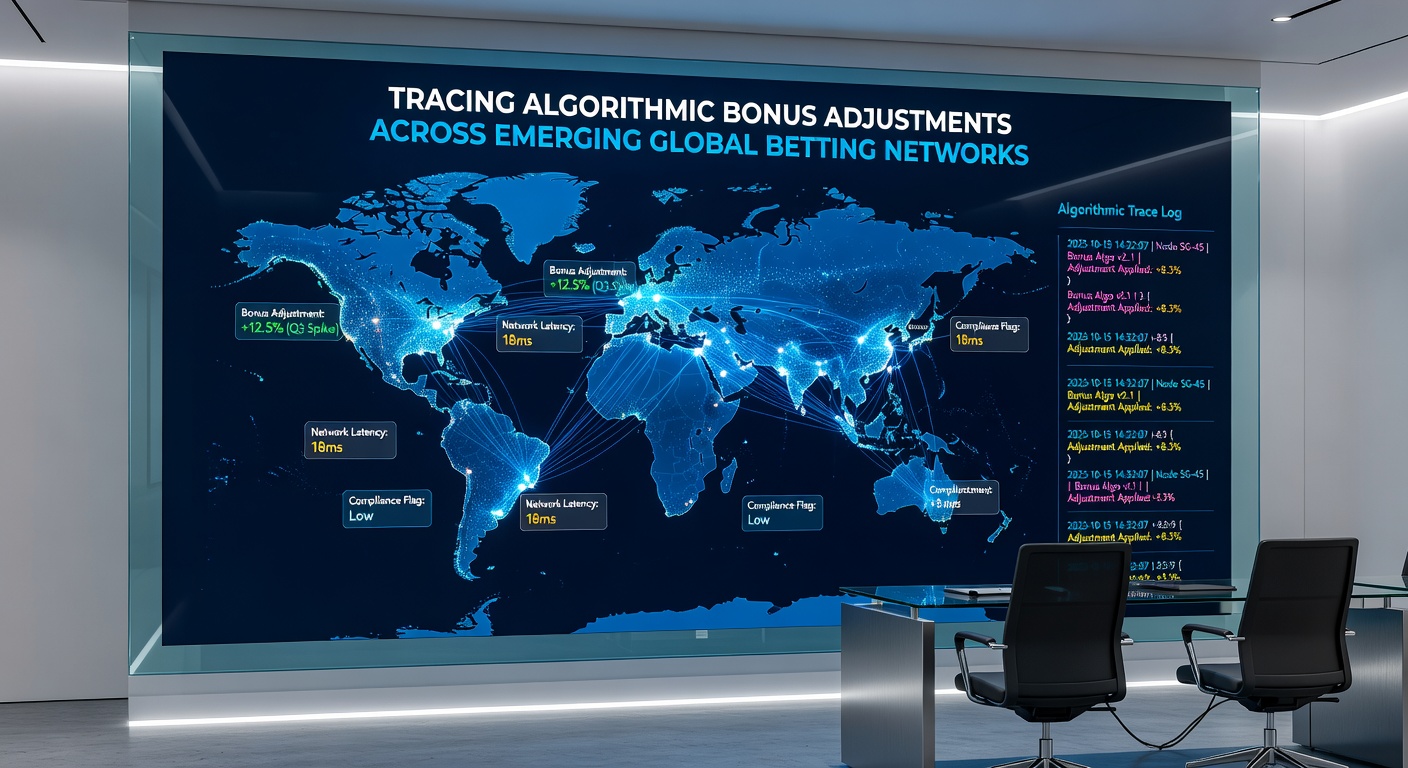
Adjustments also factor in external signals such as currency fluctuation and sporting event calendars, so a major international tournament can prompt temporary inflation of match bonuses in markets where betting volumes traditionally surge. Operators maintain separate rule sets for each regulatory environment yet feed them into a unified scoring engine that outputs personalized bonus parameters within predefined guardrails.
Regulatory Oversight and Compliance Tracking
Authorities in multiple jurisdictions now require operators to log every algorithmic decision that alters bonus value, creating audit trails that regulators can query on demand. The Malta Gaming Authority, for instance, has issued technical standards mandating that any automated change remain reversible within a documented timeframe and that historical parameters stay accessible for at least 24 months. Similar requirements appear in draft guidelines from the Australian Communications and Media Authority, which emphasize transparency around how models weigh user data when scaling promotional offers.
Compliance teams increasingly employ third-party verification tools that replay algorithmic decisions against stored data sets, confirming that adjustments did not breach advertised terms. These verification processes have grown more sophisticated in 2026, incorporating cryptographic checksums that flag any post hoc modification to historical bonus rules.
Future Developments in Algorithmic Governance
Developers continue to explore federated learning approaches that let regional nodes contribute training data without exposing raw player records, potentially reducing cross-border data transfer friction while preserving model accuracy. Early pilots reported by academic groups at the University of Nevada, Reno suggest these methods could cut adjustment latency by an additional 30 percent compared with centralized architectures currently in use. Observers expect wider adoption once hardware security modules become standard across more mid-tier operators.
Conclusion
Algorithmic bonus adjustments now operate as an embedded layer within global betting infrastructure, responding to player behavior, market conditions, and regulatory constraints through interconnected data flows. Documentation from multiple oversight bodies and research institutions shows that these systems have matured rapidly between 2025 and 2026, delivering more precise control over promotional economics while maintaining auditability. As networks continue to expand into new territories, the same technical patterns are likely to govern how bonuses are calibrated across an increasingly diverse set of platforms and jurisdictions.