22 May 2026
Uncovering Timezone-Driven Fluctuations in Live Dealer Availability Across International Casino Networks

Live dealer platforms operate across multiple continents where player demand shifts with the movement of the sun, and networks adjust staffing and table openings to match those rhythms. Data from international operators shows clear patterns where availability rises and falls as key markets wake up or wind down, creating predictable windows of high and low table counts. Those patterns become visible when researchers track simultaneous streams from Europe, Asia, and the Americas over consecutive weeks.
How Timezones Shape Staffing Decisions
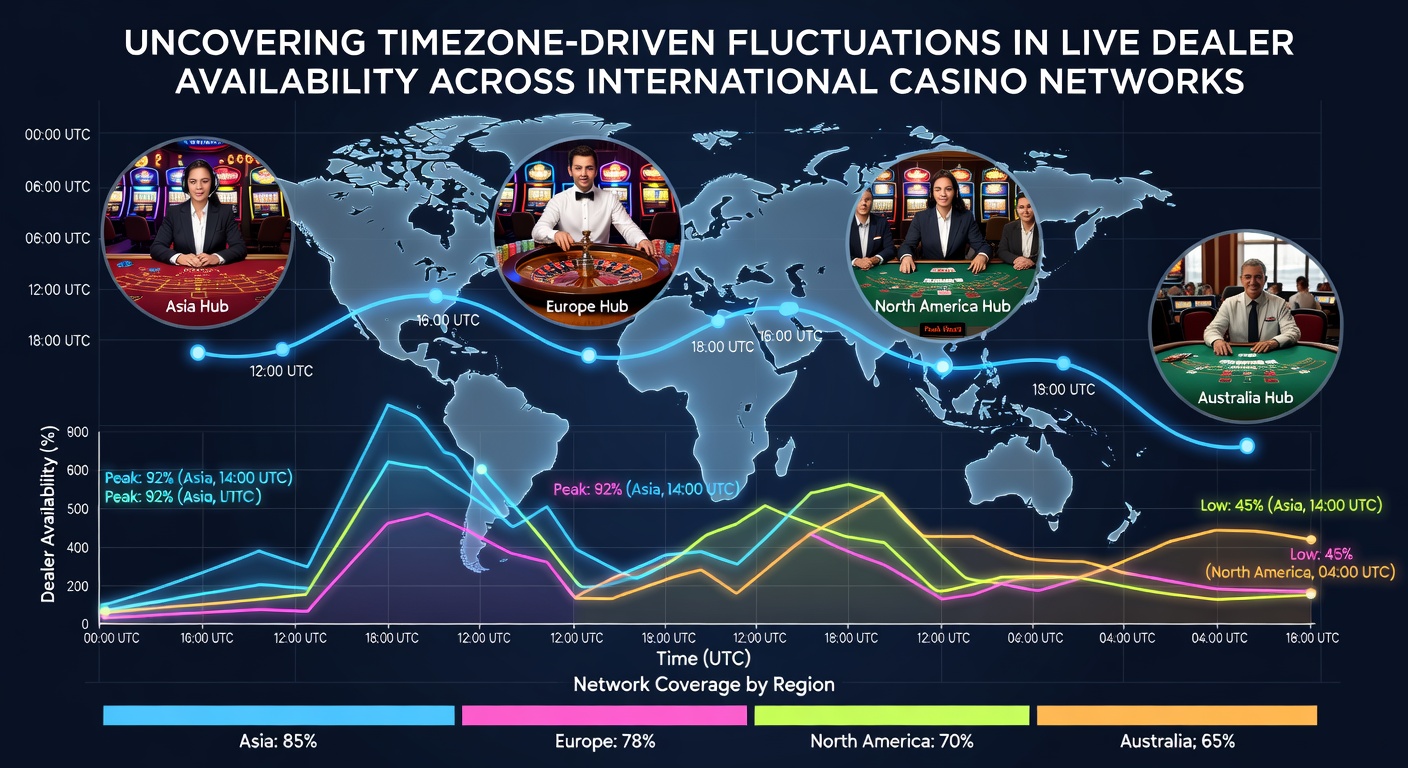
Operators maintain central scheduling systems that align dealer shifts with overlapping peak hours in major jurisdictions, yet gaps appear when one region enters nighttime while another enters afternoon. Research indicates that European tables often reach full capacity between 18:00 and 23:00 UTC while Asian tables ramp up between 08:00 and 14:00 UTC, leaving a narrow overlap period when both sets remain active. Networks respond by moving dealers between studios or activating backup tables, but the transitions still produce measurable dips in total live tables available worldwide.
Figures released by the Malta Gaming Authority in 2025 documented average table reductions of 18 percent during the 02:00 to 05:00 UTC window across operators serving multiple continents. The same report noted that North American demand peaks between 01:00 and 04:00 UTC, prompting some networks to increase dealer rotations during those hours even when European volumes drop.
Regional Patterns Observed in Network Data
Observers tracking ten major platforms throughout 2025 recorded consistent availability curves tied directly to local time zones rather than to promotional calendars. In Australia, live baccarat and blackjack tables expanded sharply after 09:00 local time, while Canadian markets showed secondary surges after 20:00 Eastern Time. Those staggered increases created temporary shortages when operators lacked enough cross-trained dealers to cover simultaneous demand spikes.
One longitudinal study conducted by researchers at the University of Nevada, Reno examined 14 months of streaming logs and found that availability fluctuations averaged 22 percent between the lowest and highest points of any 24-hour cycle. The study also identified that networks using centralized dealer pools experienced smaller swings than those relying on regional studios, because the former could redistribute staff across time zones within a single shift.
Operational Adjustments and Technology
Platforms now deploy predictive staffing models that incorporate historical player data from each jurisdiction, yet sudden events such as sporting tournaments or holidays still produce unplanned shortages. During May 2026, several networks reported extended wait times for popular games when European football finals coincided with Asian holiday weekends, stretching dealer resources thinner than forecast models had anticipated. Real-time dashboards visible to players began displaying estimated wait times for each table, allowing operators to redirect traffic toward less crowded variants.
Automatic table merging and splitting functions have reduced some friction, but they require dealers who hold licenses valid across multiple regulatory jurisdictions. The Canadian Gaming Association notes that licensing harmonization efforts have increased the pool of eligible staff, yet full coverage during every overlap window remains operationally complex.
Data Sources and Measurement Methods
Independent monitoring services compile availability statistics by scraping public lobby information at fixed intervals, then correlating those counts with UTC timestamps. The resulting datasets reveal recurring troughs that align precisely with regional sleep cycles rather than with any single operator's internal schedule. One analysis covering 42 networks in early 2026 showed that the global minimum for active live tables consistently occurred between 03:30 and 05:30 UTC on weekdays, shifting later on weekends when Asian markets remained active longer.
Regulators in several jurisdictions now require operators to publish minimum staffing commitments during designated hours, which has added another layer of predictability to the availability curves. Those requirements, combined with improved scheduling software, have narrowed but not eliminated the fluctuations that players encounter when hopping between networks.
Conclusion
Timezone-driven availability changes continue to define the operational landscape for international live dealer networks, with measurable impacts on table counts at different hours. Continued collection of cross-regional data allows operators and regulators to refine staffing strategies, while players gain clearer expectations about when certain games reach capacity. As networks expand and licensing frameworks evolve, the underlying patterns tied to global time differences remain a central factor in daily service levels.