1 Jul 2026
User Habit Tracking Mechanisms and Their Role in Customizing Experiences Within Multi-Game Online Environments
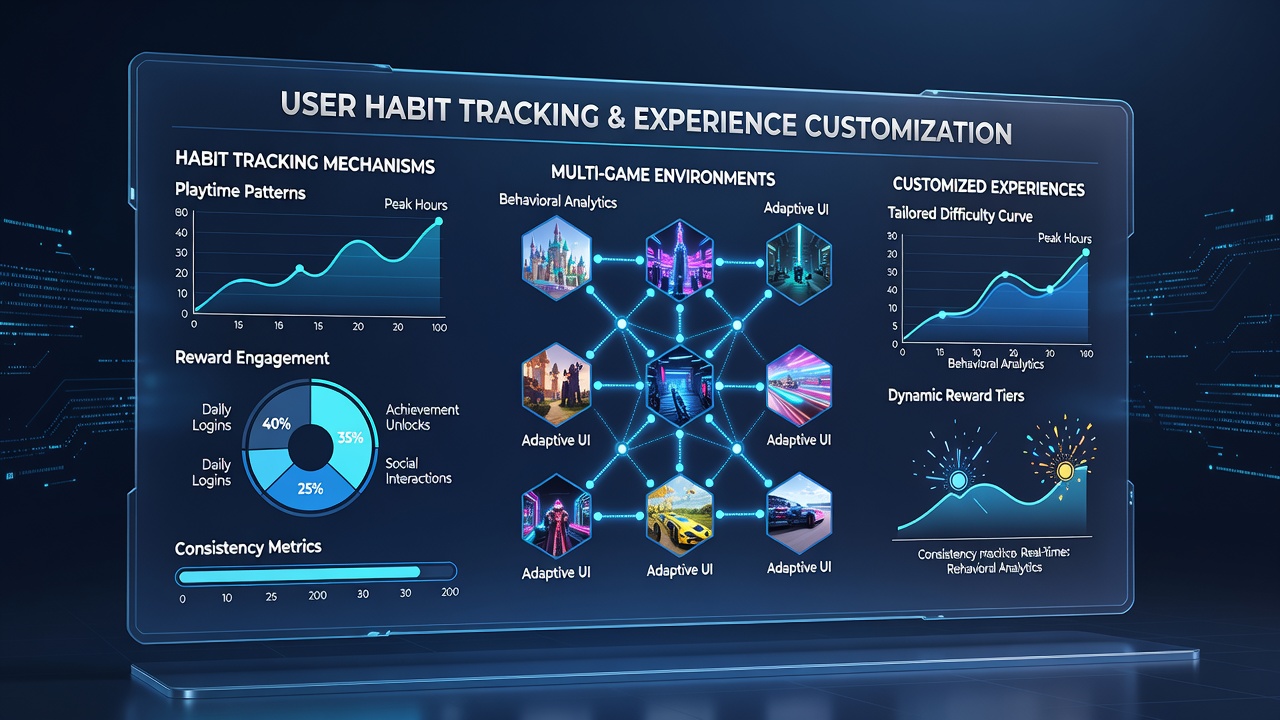
Multi-game online environments rely on structured data collection processes to monitor user interactions across different titles, and these mechanisms operate through integrated logging systems that record session durations, menu navigation patterns, and in-game decision sequences while users switch between games on shared platforms. Researchers at institutions like Stanford University have documented how such tracking compiles behavioral datasets that enable platforms to adjust interface elements, content recommendations, and progression systems based on aggregated patterns observed across user bases.
Core Components of Habit Tracking Systems
Platforms collect telemetry from device inputs and server-side logs, and this data includes metrics such as average time spent in specific game modes, frequency of social feature usage, and response times to in-app prompts, which together form profiles that update in real time as players move between environments. According to reports from the US Federal Trade Commission, these systems often employ machine learning models trained on historical interaction data to identify clusters of similar habits among millions of accounts, allowing for segmentation without direct manual intervention.
Event-driven triggers activate when certain thresholds are met, such as repeated returns to a particular genre or consistent avoidance of competitive modes, and platforms then modify elements like tutorial pacing or notification timing to align with detected preferences. Data from the Australian Communications and Media Authority indicates that cross-game synchronization protocols ensure continuity, so a user's established rhythm in one title influences default settings in another within the same ecosystem.
Customization Processes Driven by Tracked Data
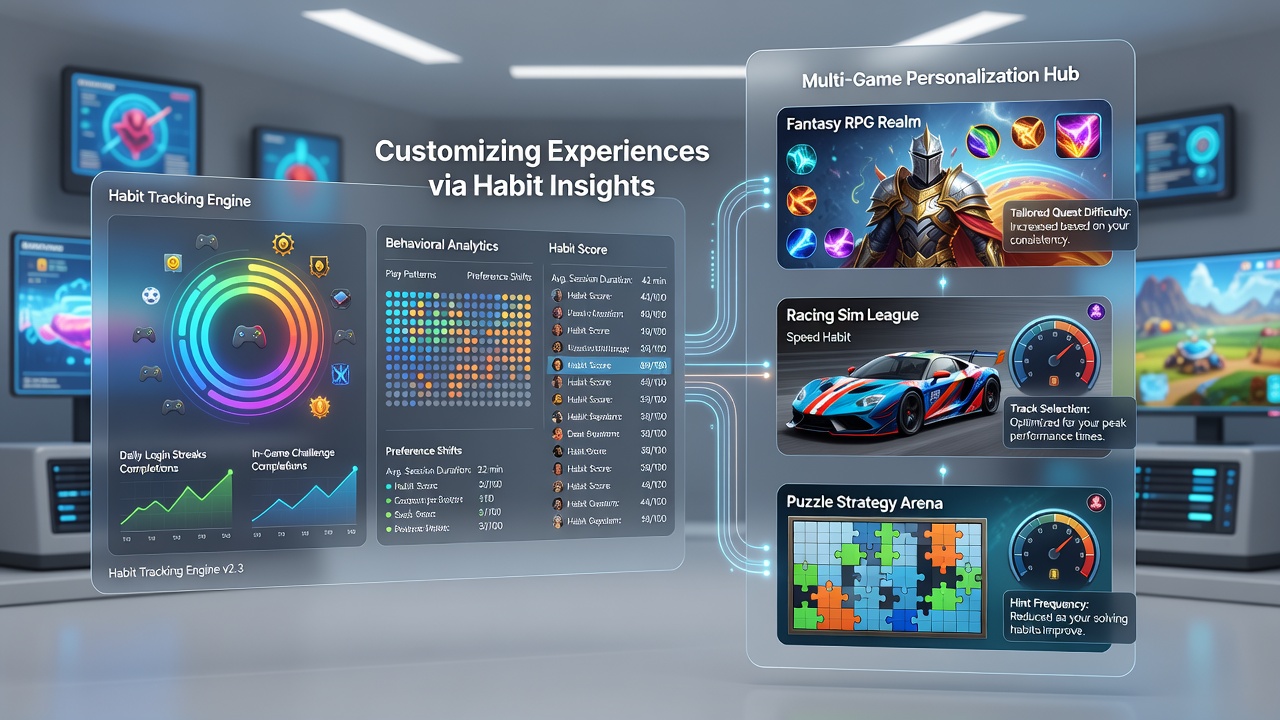
Recommendation engines draw from habit profiles to surface new titles or modes that match observed play styles, and this occurs through algorithmic matching that prioritizes titles with similar engagement curves rather than generic popularity rankings. Platforms adjust visual layouts dynamically, for instance by repositioning menus based on frequent access points logged during prior sessions, while difficulty scaling algorithms reference past performance metrics to calibrate challenge levels automatically.
In July 2026, several major multi-game services implemented enhanced tracking layers that incorporated device sensor data alongside traditional inputs, and this allowed finer adjustments to audio settings or control schemes tailored to individual usage rhythms across portable and stationary devices. Studies from the Interactive Games and Entertainment Association show that such customizations correlate with extended session continuity, as systems anticipate transitions between games and preload relevant assets accordingly.
Integration Across Platform Ecosystems
Centralized databases aggregate habit signals from disparate game clients, and these repositories apply normalization techniques so data from fast-paced action titles aligns with slower strategic ones for comparative analysis. Developers access anonymized subsets through APIs that enforce differential privacy standards, ensuring individual patterns contribute to broader models without exposing raw records. Observers note that this architecture supports A/B testing frameworks where variants of customization rules deploy to user cohorts segmented by habit similarity scores.
Third-party analytics tools sometimes feed into these systems when platforms permit, and integration occurs under strict data-sharing agreements that limit scope to performance indicators rather than personal identifiers. Research published by the European Data Protection Board highlights how consent mechanisms require explicit opt-ins for cross-game tracking features, with granular controls allowing users to exclude specific categories of interaction data from profile construction.
Technical Infrastructure Supporting Real-Time Adaptation
Edge computing nodes process incoming habit streams to minimize latency during live adjustments, and this setup enables immediate responses such as altering reward schedules mid-session based on detected fatigue indicators from interaction velocity metrics. Database schemas evolve to accommodate new event types as platforms expand their game libraries, while version control systems track changes to tracking parameters to maintain consistency across updates rolled out globally.
Security protocols encrypt habit datasets both in transit and at rest, and compliance audits verify adherence to regional standards that govern retention periods for behavioral logs. Platforms maintain audit trails documenting every instance where tracked data influences a customization decision, providing transparency logs accessible through account dashboards for verification purposes.
Conclusion
Habit tracking mechanisms continue to underpin customization capabilities in multi-game online environments through systematic data pipelines that translate raw interactions into actionable profile adjustments. As platforms expand in July 2026 and beyond, the infrastructure evolves to handle increased data volumes while maintaining synchronization across titles and devices. External oversight from bodies like the Federal Trade Commission and academic analyses from groups such as the Interactive Games and Entertainment Association provide ongoing frameworks for evaluating these systems' operational scope and privacy safeguards.