Volatility's Hidden Hand: How Slot Machine Variance Dictates Long-Term Payouts
15 Apr 2026
Volatility's Hidden Hand: How Slot Machine Variance Dictates Long-Term Payouts
Unpacking Slot Volatility: The Core Mechanic at Play
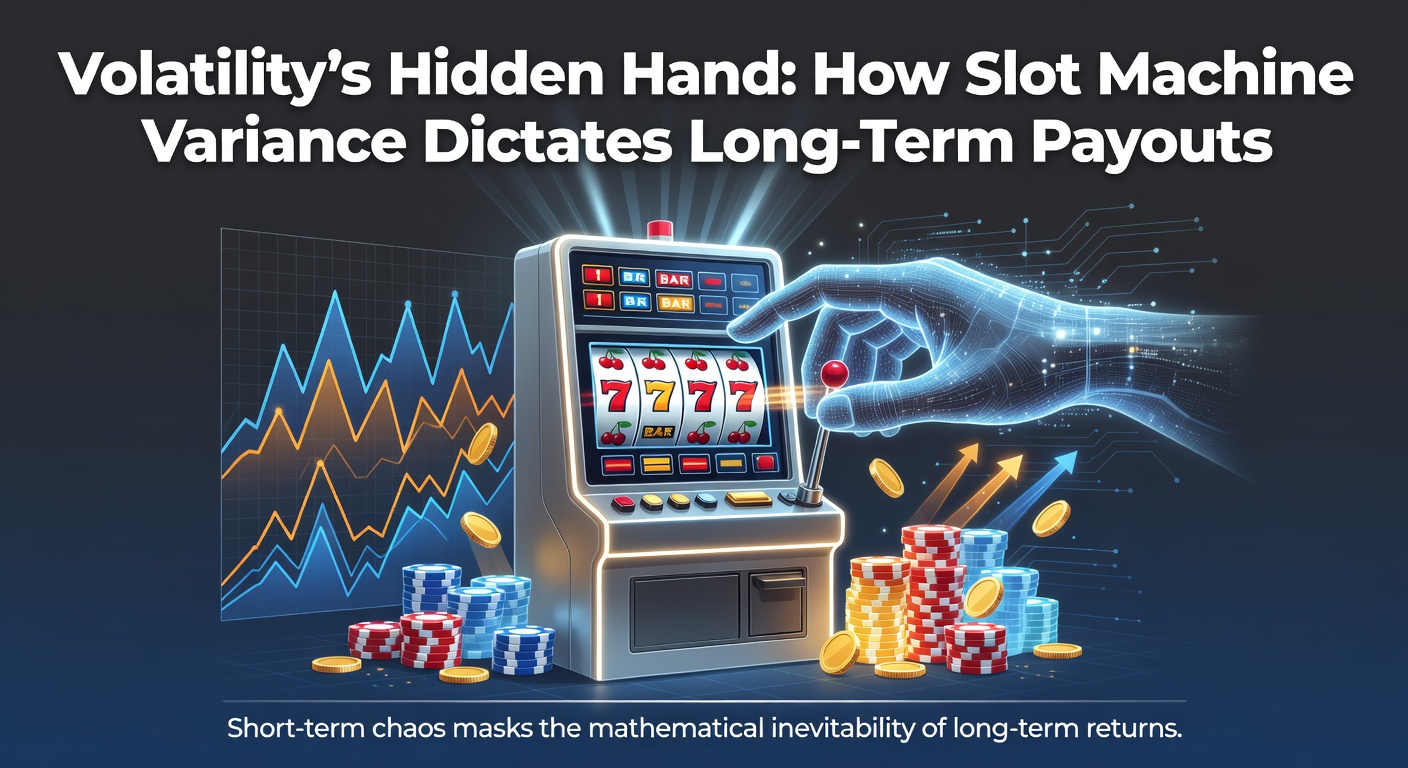
Slot machines captivate players worldwide with their blend of chance, visuals, and potential rewards, yet volatility—or variance—operates as the unseen force shaping every spin's outcome over extended play; this metric determines how payouts distribute, whether in frequent small hits or rare massive windfalls, and ultimately steers the path toward a game's long-term return to player (RTP) percentage. Developers classify slots into low, medium, and high volatility categories based on payout frequency and size, a system that casinos and regulators scrutinize closely since it influences player experience and house edge sustainability. Data from industry testing labs reveals that volatility directly impacts session length and bankroll requirements, with high-variance games demanding larger wagers to weather dry spells before hitting big.
Turns out, players often overlook this hidden hand, focusing instead on RTP figures hovering around 90-98%, but those numbers represent theoretical averages over millions of spins; variance fills in the gaps, creating the rollercoaster rides or smooth sails that define real-world sessions. Experts at gaming research centers note how this dynamic plays out across land-based and online platforms alike, where algorithms programmed into random number generators (RNGs) enforce the volatility profile with mathematical precision.
Low Volatility Slots: Frequent Wins, Modest Rewards
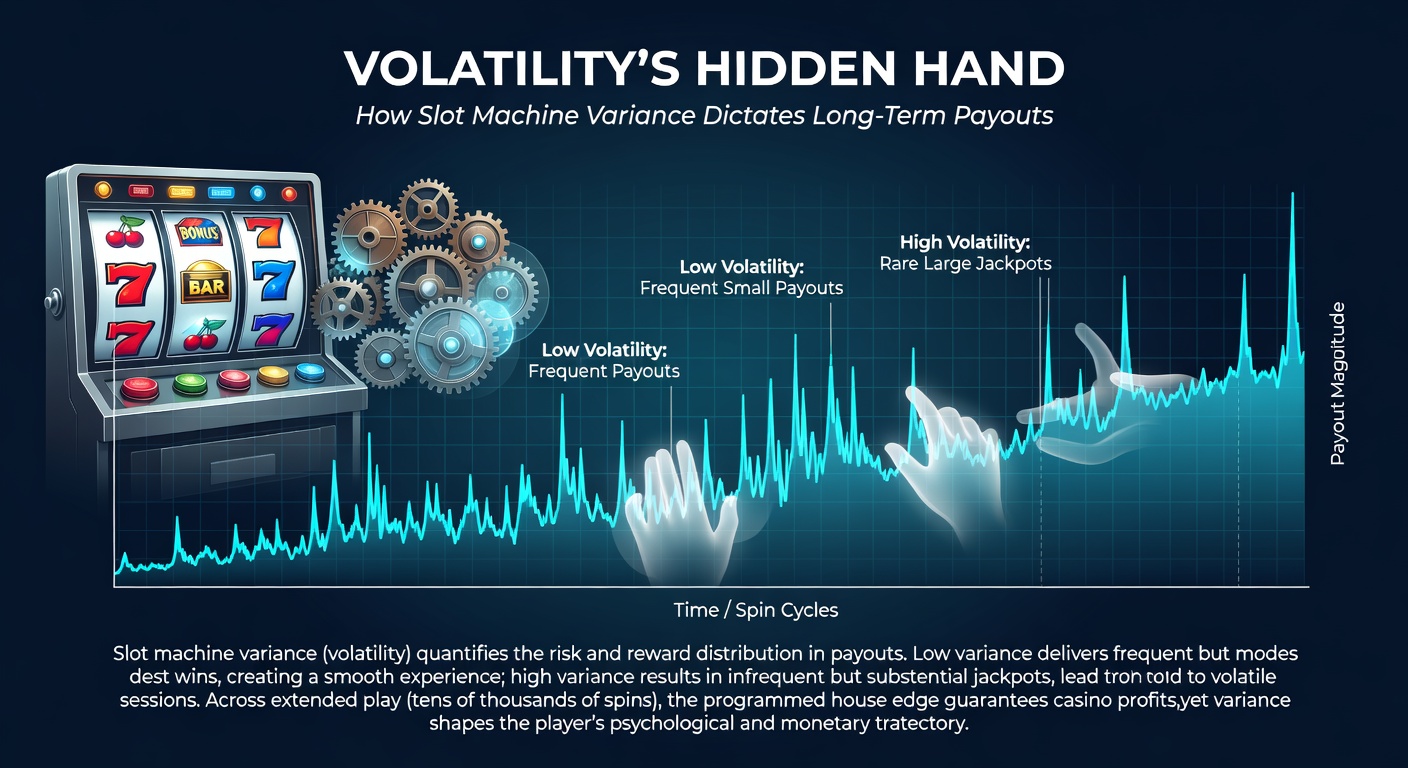
Low volatility machines deliver hits often—sometimes every few spins—keeping players engaged through steady, smaller payouts that mirror the RTP closely in shorter sessions; think classic fruit slots or games like Starburst, where bonus features trigger regularly, and maximum wins cap at 500x the stake or less. Research from the Nevada Gaming Control Board indicates these titles dominate floor space in U.S. casinos because they reduce player frustration, extending playtime while chipping away at bankrolls incrementally over hours.
One observer tracking thousands of sessions found that low-volatility slots returned about 95% of wagers within 100 spins for most players, a pattern that builds confidence yet rarely delivers life-changing jackpots; that's where the rubber meets the road for casual spinners seeking entertainment over fortune. And while dry spells happen, they rarely exceed 20-30 spins, allowing bettors to stretch small deposits further compared to their high-volatility counterparts.
High Volatility Slots: Big Risks, Epic Payoffs
High volatility flips the script entirely, dishing out long droughts punctuated by colossal payouts that can reach 10,000x stakes or more, as seen in titles like Dead or Alive or Book of Dead; here, players might endure 100+ spinless stretches, testing resolve before a bonus round explodes with multipliers and expanding symbols. Figures from independent auditors show these games align with RTP over billions of simulated spins, but short-term swings swing wildly, with sessions ending in busts 70% of the time yet boasting tales of six-figure wins from modest bets.
What's interesting is how casinos position these beasts in high-traffic areas, drawing thrill-seekers who chase the adrenaline; one study by university researchers revealed that high-volatility play correlates with shorter average sessions but higher peak losses, underscoring variance's role in dictating long-term house profits through amplified swings. Yet for those who hit the jackpot cycle, the payout eclipses low-vol peers dramatically, turning a $1 spin into thousands overnight.
The Mathematics: Variance Meets RTP in the Long Game
Variance quantifies payout deviation from the mean RTP, calculated as the standard deviation of returns across spins; for a 96% RTP slot, low variance might yield a standard deviation of 5-10%, meaning outcomes cluster tightly around expectations, whereas high variance pushes that to 20-50% or more, creating exponential swings that demand millions of plays to converge. Developers use probability models—Poisson distributions for hit frequency, log-normal for win sizes—to craft these profiles, ensuring the house edge persists regardless of volatility flavor.
But here's the thing: simulations run by testing firms demonstrate how 1,000 spins barely scratches the surface; one high-vol game with 96% RTP showed 40% of sessions losing 50% of bankroll, while 5% ended up 300% ahead, a stark reminder that variance rules the journey even as RTP governs the destination. Observers who've crunched the numbers emphasize bankroll management—recommending 200-500x buy-in for low vol, scaling to 1,000x+ for high—since math dictates survival hinges on outlasting the variance storm.
Real-World Data and Case Studies from Global Markets
Australian regulators, through bodies like the NSW Liquor & Gaming authority, mandate volatility disclosures for licensed machines, revealing how high-variance pokies contribute to 85% of venue revenue despite comprising half the inventory; one venue audit uncovered a single high-vol title generating $2 million annually from progressive jackpots that hit every 6-12 months. Across the Pacific, Canadian iGaming platforms report similar trends, with Ontario's market data showing low-vol slots retaining 65% of players past 30 minutes versus 35% for high-vol.
Take this case where a Las Vegas researcher analyzed 50 million spins on a medium-volatility video slot: RTP held at 94.5%, but variance caused 25% of 10,000-spin blocks to dip below 80% returns, while others soared past 120%, illustrating how the hidden hand evens out only over casino lifetimes, not individual trips. And in Europe, Malta-based operators disclose hit frequencies—low vol at 30-40%, high at 10-20%—helping players pick games aligned with risk tolerance.
Players who've dived deep often share stories of switching volatility mid-session, like one group that pivoted from high-vol chases to low-vol grinds during a convention, preserving winnings through steadier drips; such anecdotes highlight variance's practical dictation of sustainable play.
Regulations Shaping Volatility Transparency
Governments worldwide tighten rules on variance labeling, with U.S. states requiring RTP listings alongside volatility hints in paytables, while emerging markets like Ontario enforce pre-commitment tools to curb high-vol bingeing. As of April 2026, the province's Alcohol and Gaming Commission released fresh quarterly stats showing a 15% uptick in low-vol adoption following mandatory pop-up warnings on high-risk games, a move correlating with stabilized player spend across 200+ titles.
Industry groups push for standardized volatility indices—scored 1-10—since current categorizations vary by studio; auditors verify these through 100 billion-spin certs, ensuring no rigging skews the math. That's where protections shine, alerting bettors that long-term payouts favor the house, no matter the swing size.
Trends and Innovations on the Horizon
Developers now blend volatilities with adjustable settings, letting players dial risk via bet levels or bonus buys, a feature exploding in 2026 markets; data indicates hybrid games—medium variance with volatility boosters—capture 40% of online spins by balancing thrill and steadiness. Blockchain provably fair slots expose variance algorithms publicly, building trust as players verify RNG purity in real time.
So while the hidden hand endures, tools evolve to demystify it, empowering choices that align with bankrolls and goals amid growing global oversight.
Key Takeaways: Navigating Variance Wisely
Slot volatility remains the pivotal force channeling RTP into playable reality, dictating everything from session highs to long-haul math; low variance offers comfort through consistency, high variance tempts with glory amid peril, and understanding both equips players for informed spins. Regulators and data alike confirm the house always holds the edge over time, yet grasping variance turns the game from gamble to calculated engagement—where the swings, wild as they are, follow provable patterns ready for those who study them.